Hooking a massive trailer to your vehicle completely changes the laws of physics you experience behind the wheel. Suddenly, your vehicle weighs twice as much, takes three times as long to stop, and handles entirely differently. Towing heavy loads requires a completely different mindset and a strict adherence to safety protocols.
Whether you haul construction equipment to a job site or pull a large travel trailer across the country, safety must always remain your top priority. A single mistake during the hitching process or a miscalculation on the highway can lead to catastrophic accidents. You cannot afford to cut corners when dealing with thousands of pounds of rolling steel.
In this comprehensive guide, we will break down the absolute most important safety tips for towing heavy trailers. You will learn how to distribute weight correctly, master the hitching process, and operate trailer braking systems. We will also provide actionable driving strategies to help you navigate sharp turns and sudden stops with total confidence.
Before you even turn the key in the ignition, you must secure the physical connection between your truck and your trailer. Proper loading and secure hitching form the foundation of a safe trip. If you get these steps wrong, no amount of driving skill will save you on the road.
Improper weight distribution causes more towing accidents than almost any other factor. If you load a trailer incorrectly, it becomes wildly unstable at highway speeds. You must follow the 60/40 rule for every single load you pull.
Place 60 percent of the total cargo weight securely in front of the trailer’s axles, pushing the weight toward the towing vehicle. Place the remaining 40 percent behind the axles. This specific distribution ensures you apply the correct amount of “tongue weight” to your truck’s hitch.
Tongue weight refers to the downward force the trailer exerts on the hitch ball. Ideally, this should sit between 10 and 15 percent of the total loaded trailer weight. If you place too much weight at the rear of the trailer, the tongue lifts upward. This pulls the rear wheels of your truck off the pavement, completely destroying your steering control and causing violent trailer sway.
Always secure your cargo tightly using heavy-duty ratchet straps or chains. If a heavy machine shifts backward while you drive up a steep hill, it instantly ruins your perfect weight distribution and creates a massive roadside hazard.
Connecting the trailer to your truck requires absolute precision. Never rush this process. Lower the trailer coupler onto the correct-sized hitch ball until it seats completely. Engage the locking latch and immediately insert a metal safety pin or padlock through the latch hole. This prevents the latch from popping open when you hit a massive pothole.
Next, address your safety chains. You must always cross the safety chains underneath the trailer tongue before hooking them to your truck. Crossing the chains creates a sturdy metal cradle. If the trailer miraculously disconnects from the ball, the tongue will drop into this cradle of chains rather than digging directly into the highway pavement.
Finally, connect your breakaway cable. This thin wire connects to a switch on the trailer and hooks directly to your truck’s frame. If the trailer separates from the vehicle, the cable pulls the switch and instantly engages the trailer’s emergency brakes, stopping it from rolling into oncoming traffic.
You cannot rely purely on your truck’s brakes to stop an additional 10,000 pounds of weight. Heavy commercial and recreational trailers utilize their own independent braking systems to help bring the rig to a safe halt. You must understand how your specific system works to tow safely.
Boat trailers and heavy rental trailers frequently use surge brakes. These hydraulic systems operate purely on physical momentum. When you press the brake pedal in your truck, the truck slows down. The heavy trailer then pushes forcefully against the hitch. This physical pushing motion compresses a hydraulic cylinder inside the trailer tongue, which activates the trailer brakes. Surge brakes require zero electronic connections to operate.
Conversely, electric brakes use an electromagnet to actuate the brake shoes. When you press the brake pedal in your truck, an electronic signal travels through the 7-way wiring harness to the trailer. This activates the trailer brakes instantly. Electric brakes provide much smoother stopping power and give the driver significantly more control over the trailer.
If your trailer features electric brakes, your truck must have an electronic brake controller installed in the cabin. The controller dictates exactly how much power flows to the trailer brakes.
Before hitting the highway, you must adjust the “gain” on your brake controller based on the weight of your load. Find an empty parking lot, drive roughly 15 miles per hour, and slide the manual override lever on the controller. The trailer brakes should engage firmly and stop the vehicle without locking up the tires. If the trailer tires lock and skid, turn the gain down. If the trailer barely slows you down, turn the gain up.Test your trailer brakes manually every single time you start a new trip to ensure the wiring harness maintains a solid connection.
Driving a vehicle with a heavy trailer attached requires immense concentration. You must anticipate the actions of other drivers and give yourself massive safety margins. Adopt these driving strategies to keep your rig under control.
Speed acts as the ultimate enemy of a heavy trailer. Most trailer tires carry a strict speed rating of 65 miles per hour. Exceeding this speed generates massive heat inside the tire, eventually leading to a violent blowout. Towing a heavy load means you commit to driving slower than the flow of regular traffic. Stay in the right lane and take your time.
You must also drastically increase your following distance. A truck pulling a heavy trailer takes significantly longer to stop than a standard passenger car. If you usually leave three seconds of space between you and the car ahead, increase that to at least seven seconds. This massive buffer gives you the time and distance required to apply the brakes smoothly if traffic suddenly halts.
Trailers do not follow the exact path of your towing vehicle. When you make a turn, the trailer will naturally cut the corner much tighter than your truck. If you turn like you normally do, the trailer tires will jump the curb, destroy road signs, or crush nearby pedestrians.
You must swing your truck wide before initiating a turn. Pull further out into the intersection before turning the steering wheel. Watch your side mirrors closely throughout the entire turning motion to ensure the trailer tires clear the obstacles on the inside corner.
Heavy trailers also create massive blind spots directly behind and beside your rig. Install heavy-duty tow mirrors that extend outward, giving you a clear view down the entire length of the trailer. Never change lanes without double-checking these extended mirrors and signaling your intentions well in advance.
Trailer sway represents the most terrifying experience a driver can face while towing. High winds, passing semi-trucks, or sudden steering movements can cause the trailer to whip violently from side to side.
If your trailer begins to sway, never slam on your truck’s brakes. Slamming the truck brakes makes the sway infinitely worse and will likely cause you to jackknife. Instead, take your foot completely off the accelerator pedal to let the vehicle naturally lose speed. Keep the steering wheel pointed straight ahead.
Reach down to your electronic brake controller and squeeze the manual override lever gently. Applying the trailer brakes independently pulls the trailer taut against the truck, quickly pulling it back into a straight line and eliminating the sway.
Professional truck drivers perform a comprehensive vehicle inspection before every single shift. You should adopt this exact same habit. A five-minute walk around your rig prevents hours of misery on the side of the highway.
Check the tire pressure on all truck and trailer tires. Underinflated tires overheat rapidly under heavy loads and will blow out without warning. Inspect the tire tread for uneven wear, which usually indicates a bent trailer axle.Test all exterior lighting. Ensure your running lights, turn signals, and brake lights function perfectly. Drivers behind you must know when you plan to stop or change lanes.
Finally, physically grab your safety chains, hitch latch, and electrical plug to ensure everything remains tight and secure before you pull out of the driveway.
Safe towing completely depends on the quality of your equipment. A rusted hitch or a poorly maintained trailer puts your life and your cargo at serious risk. Upgrading your hauling setup gives you massive peace of mind when you hit the open road.
When you need to buy a heavy-duty trailer or upgrade your vehicle’s towing hardware, Anything Marketplace simplifies the entire process. We connect buyers directly with reputable sellers offering commercial-grade flatbeds, enclosed cargo trailers, and heavy equipment haulers.
You can easily browse our extensive listings to find the exact payload capacity and trailer style you need for your business or lifestyle. Use our advanced search filters to discover high-quality weight distribution hitches, brake controllers, and heavy-duty tow vehicles.
Visit Anything Marketplace today to secure the reliable towing equipment you need to transport your heaviest loads safely and confidently.
Shop Cars
Moving equipment, delivering goods, and hauling materials all require the right tools. If your company relies on transporting heavy loads, a dependable trailer acts as the backbone of your daily operations. Buying the wrong trailer wastes money, slows down your crew, and creates massive safety risks on the highway.
Finding the perfect trailer involves more than just picking a size and a price tag. You must match the equipment to your specific daily tasks. A landscaping company needs entirely different hauling capabilities than a local plumbing contractor or a long-haul car transporter.
In this guide, we will break down exactly how to choose the perfect trailer for your business. We will explore the most common types of commercial trailers and explain their specific uses. You will learn how to assess your payload needs, handle maintenance, and prioritize safety. Finally, we will show you where to find the best options for your growing fleet.
The trailer market offers a massive variety of specialized designs. Each type serves a specific purpose and solves unique transportation challenges. Before you start shopping, you need to understand which style aligns perfectly with your daily workflow.
Flatbed trailers offer the ultimate versatility for commercial hauling. Because they lack walls and a roof, you can load them from the top, the back, or either side. This open design makes them the absolute best choice for moving bulky, irregularly shaped items that simply will not fit through standard doors.
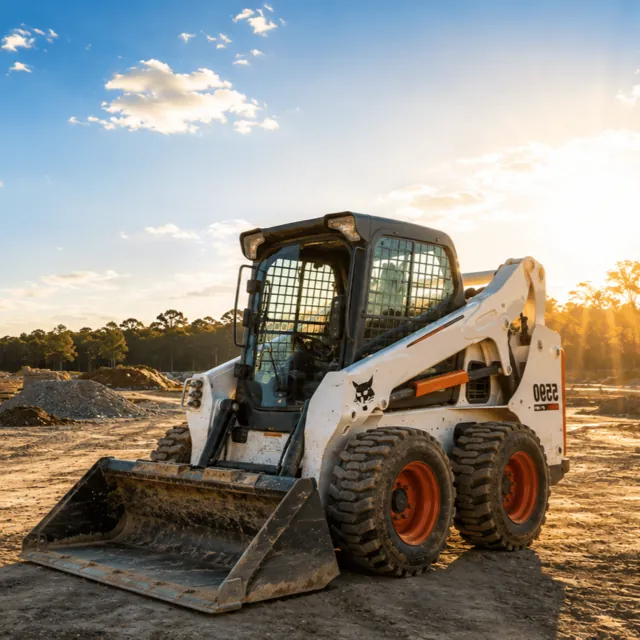
Construction crews rely heavily on flatbeds to transport lumber, massive steel beams, and heavy machinery like skid steers or mini excavators. Forklifts can easily approach a flatbed from the side to drop heavy pallets directly onto the deck.
However, flatbeds offer zero protection from the weather. If you haul sensitive equipment or materials that rust easily, you must spend extra time securing heavy-duty tarps over your load before hitting the road.
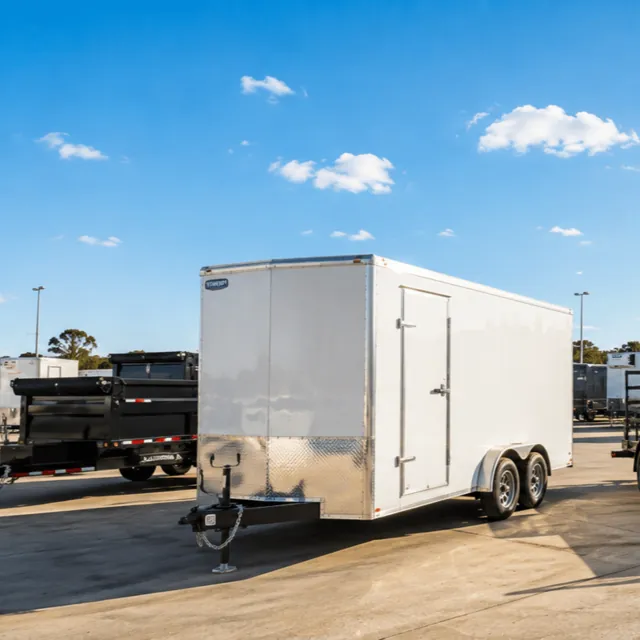
If security and weather protection rank high on your priority list, an enclosed trailer is the perfect solution. These box-like trailers feature solid walls, a sturdy roof, and lockable rear doors. They act as a mobile, secure storage unit for your valuable business assets.
Electricians, plumbers, and mobile mechanics love enclosed trailers. You can install custom shelving, tool racks, and workbench areas inside the box. This allows your crew to stay organized and work efficiently directly out of the trailer while at a job site.
Enclosed trailers also protect your cargo from rain, snow, and intense sunlight. When you finish work for the day, you can simply lock the doors. This provides massive peace of mind, knowing your expensive tools are safe from opportunistic thieves.
Dump trailers feature a powerful hydraulic lifting mechanism located under the cargo bed. With the push of a button, the front of the bed rises, allowing gravity to slide heavy materials out the back. This design saves your crew hours of backbreaking manual labor.
These trailers are absolutely essential for landscaping, demolition, and roofing companies. You can easily haul massive loads of gravel, dirt, mulch, or construction debris. Instead of paying workers to shovel out the back of a pickup truck, a dump trailer unloads tons of material in a matter of seconds.
When shopping for a dump trailer, pay close attention to the lifting capacity of the hydraulic hoist. Make sure the lifting mechanism can handle the actual weight of the wet dirt or concrete debris you plan to haul.
Once you know the type of trailer you want, you need to drill down into the specific details. Buying a trailer that lacks the proper capacity will quickly lead to broken axles and ruined suspension components. Consider these critical factors before making a purchase.
Payload capacity dictates exactly how much weight the trailer can safely carry. You must calculate the weight of your heaviest tools, materials, and equipment. Never guess this number, as overloading a trailer is illegal and incredibly dangerous.
Look at the Gross Vehicle Weight Rating (GVWR) of the trailer. This number represents the maximum total weight of the trailer itself plus the cargo inside it. Subtract the empty weight of the trailer from the GVWR to find your true payload capacity.
Always buy a trailer with a payload capacity that exceeds your maximum requirements by at least twenty percent. Giving yourself this buffer prevents premature wear and tear on the axles, tires, and frame.
Think deeply about where your business operates most often. The terrain and travel distance play a massive role in choosing the right suspension and tire setup.
If you drive primarily on smooth highways for hundreds of miles, a torsion axle suspension provides a remarkably smooth ride. This protects fragile cargo from excessive bouncing and vibration.
However, if your crew frequently navigates rutted dirt roads, muddy construction sites, or steep mountain passes, you need a leaf spring suspension. Leaf springs handle rough impacts much better and are significantly cheaper to repair if you break a component far from home.
How often will you hook up this trailer? If you only use it once a month for light deliveries, a standard, entry-level model will likely serve you well. You can save money by choosing a trailer with a painted steel frame and basic features.
If your trailer hits the road every single day, you must invest in heavy-duty, commercial-grade equipment. Consider upgrading to an aluminum frame to prevent rust and reduce the overall weight. Look for upgraded radial tires, heavy-duty D-ring tie-downs, and reinforced flooring that can survive daily abuse.
A trailer is a significant financial investment. Taking proper care of it extends its lifespan and keeps your drivers safe on the road. Neglecting maintenance inevitably leads to blown tires, failed brakes, and terrible accidents.
You must inspect your trailer before every single trip. Check the tire pressure on all wheels, including the spare. Underinflated tires generate excessive heat and will blow out under a heavy load. Inspect the tire tread for uneven wear, which usually indicates a bent axle or a suspension problem.
Test all the exterior lights. Ensure the brake lights, turn signals, and running lights function perfectly. A burnt-out bulb easily leads to a rear-end collision on a dark highway.
Finally, grease the wheel bearings regularly. Dry bearings will eventually seize up and completely destroy the axle spindle. Repack the bearings with fresh grease every year or every 10,000 miles, whichever comes first.
Safety starts before you even put the truck in drive. You must distribute the weight of your cargo properly. Always place about 60 percent of the load weight in front of the trailer axles. This puts the correct amount of downward force on the truck’s hitch.
If you place too much weight at the rear of the trailer, it will cause severe trailer sway. The trailer will violently whip back and forth at highway speeds, which frequently causes the towing vehicle to lose control and crash.
Always cross your safety chains under the trailer tongue before hooking them to the truck. If the trailer detaches from the hitch, the crossed chains create a cradle that catches the tongue, preventing it from digging into the pavement.
Choosing the right trailer drastically improves your business efficiency. Whether you need an open flatbed for massive equipment, a secure enclosed trailer for expensive tools, or a rugged dump trailer for heavy debris, the right tool exists for your specific workflow.
When you are ready to upgrade your hauling capabilities, Anything Marketplace makes the process incredibly simple. You can browse a massive selection of high-quality commercial trailers from trusted sellers across the country.
Anything Marketplace allows you to filter your search by trailer type, payload capacity, and price point. You can easily compare different brands and connect directly with sellers who understand commercial hauling. Visit Anything Marketplace today to find the reliable, heavy-duty trailer your business needs to grow and succeed.
Shop Trucks
In the transport and logistics industry, having the right equipment is not just an advantage; it’s essential for success. Your fleet’s reliability and efficiency directly impact your bottom line. However, the significant capital investment required to purchase high-quality semi-trailers can often be a major roadblock for businesses looking to grow or upgrade.
We are excited to announce a powerful new partnership designed to solve this very problem. Semi Trailer Sales, a trusted provider of top-tier trailers, is joining forces with FastFunding4U, a leading Australian finance broker. This collaboration creates a streamlined, one-stop solution for businesses to acquire the heavy-duty equipment they need with financial plans that make sense.
This partnership is built on a shared commitment to customer success. It combines industry-leading equipment with fast, flexible, and transparent financing, empowering you to expand your fleet and drive your business forward without the financial strain.
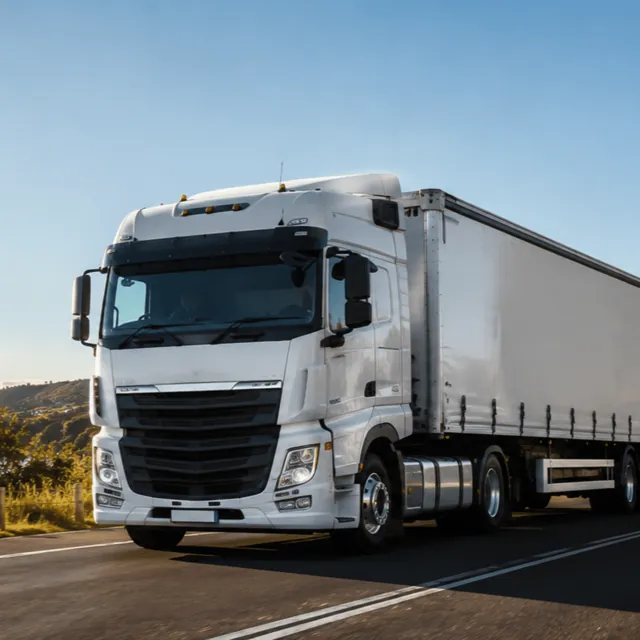
Choosing the right trailer is a critical decision. You need equipment that is durable, dependable, and perfectly suited to the demands of your work. Semi Trailer Sales has built its reputation on providing exactly that. With a deep understanding of the Australian transport industry, they offer a wide selection of high-quality new and used semi-trailers to meet the needs of various sectors.
Their commitment goes beyond just making a sale. The team at Semi Trailer Sales prioritizes customer satisfaction, offering expert advice to help you select the ideal trailer for your specific application. They understand that every business has unique requirements, whether you’re in construction, agriculture, long-haul freight, or specialized transport.
Semi Trailer Sales provides a comprehensive inventory of trailers to ensure you can find the perfect match for your operational needs. Their range includes:
By focusing on quality and reliability, Semi Trailer Sales ensures that every piece of equipment they provide is ready to perform, helping you minimize downtime and maximize productivity.
The most significant hurdle to acquiring new assets is often the upfront cost. That’s where FastFunding4U steps in. As a premier finance broker, they specialize in simplifying the process of securing business and asset finance. Their mission is to make purchasing essential equipment, like semi-trailers, accessible and affordable for businesses of all sizes.
FastFunding4U removes the traditional barriers to financing. Instead of navigating complex bank applications and long waiting periods, you get a straightforward, efficient, and personalized service.
FastFunding4U leverages its extensive network of over 50 lenders to find the most competitive rates and flexible terms for your business. Their process is designed for speed and clarity, so you can get funded and get on the road faster.
This strategic collaboration between Semi Trailer Sales and FastFunding4U is designed to provide a seamless and powerful advantage for your business. It combines the best in transport equipment with the best in asset finance, creating an end-to-end solution that saves you time, money, and stress.
This partnership empowers owner-operators to upgrade their rig, allows growing fleets to expand their capacity, and enables established companies to modernize their assets efficiently.
Your next opportunity is on the horizon, and having the right equipment is key to seizing it. With the combined strength of Semi Trailer Sales and FastFunding4U, acquiring your next semi-trailer has never been easier or more affordable.
Are you ready to upgrade your fleet and accelerate your growth?
To explore the range of high-quality trailers at Semi Trailer Sales and learn about the flexible financing options available through FastFunding4U, contact us today! Let us help you get the equipment you need to hit the road with confidence.
One of our team will be in touch shortly. Need it sooner? Call us on 1300 33 77 23.

Search anything you like. Just type it below, no need to use the options.
AI can make mistakes. Finance figures are indicative only and subject to approval.